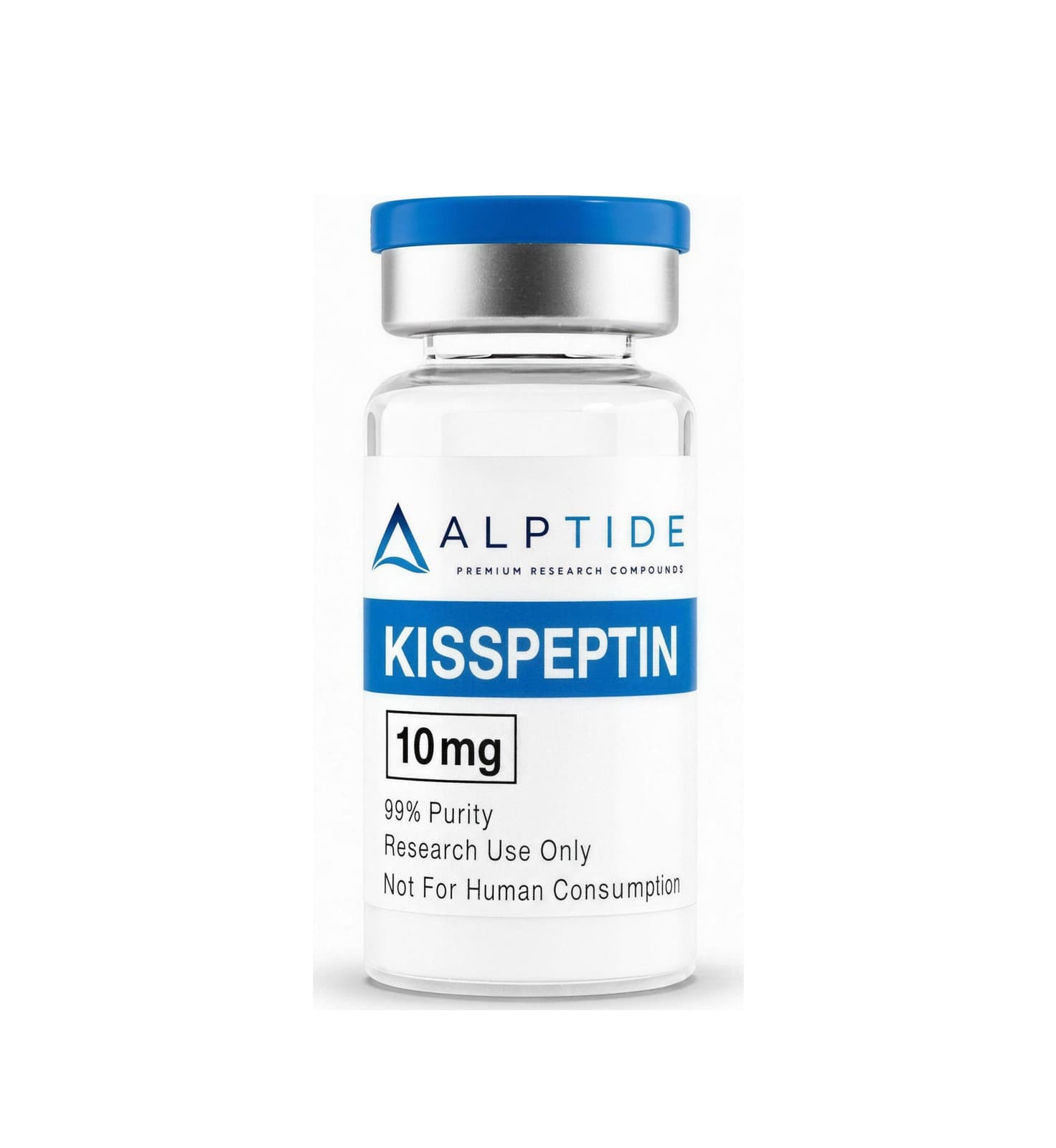
Neuroendocrine signalling research peptide for controlled laboratory studies.
- Content per vial
- 10 mg
- Batch
- 268011
Kisspeptin-10
Kisspeptin-10 (human), KISS1 (112-121) amide / metastin (45-54) amide · YNWNSFGLRF
For research purposes only — This compound is not FDA approved. All data presented is from clinical trials for educational reference.
Neuroendocrine signalling research peptide for controlled laboratory studies.
The free vials are added by themselves, of the same product. Discount codes still apply.
- Lab
- Janoshik Analytical
- Purity
- 99.208%
- Methods
- HPLC · LC-MS
- Tested
- Oct 6, 2026
For laboratory and research use only. Not for human consumption.
This product is a research chemical. It is not a drug, food, cosmetic or dietary supplement, and it is not intended to diagnose, treat, cure or prevent any disease or condition in humans or animals. It is supplied solely for in-vitro laboratory research by qualified researchers.
This product has not been evaluated or approved by the U.S. Food and Drug Administration, Swissmedic, the European Medicines Agency or any other regulatory authority.
Technical specifications
- Type
- Peptide
- Scientific name
- Kisspeptin-10 (human), KISS1 (112-121) amide / metastin (45-54) amide
- Amino acids
- 10
- Sequence
- YNWNSFGLRF
- Molecular weight
- 1302.4 g/mol
- Formula
- C63H83N17O14
- CAS
- 374675-21-5
- Origin
- C-terminal decapeptide (residues 112-121) of the human KISS1 precursor, identical to metastin(45-54); C-terminally amidated (Tyr-Asn-Trp-Asn-Ser-Phe-Gly-Leu-Arg-Phe-NH2) and the shortest fully active ligand of KISS1R/GPR54.
- Lyophilized (powder)
- -20°C · stable long-term; keep sealed, desiccated and protected from light
- Reconstituted
- 2-8°C · use within 30 days; aliquot and hold at -20°C to avoid repeated freeze-thaw
- Room temperature
- Lyophilized powder tolerates brief ambient shipping excursions of a few days without meaningful loss. In solution it does not: the decapeptide is proteolytically labile and reconstituted material left at room temperature degrades over hours to days, so vials should be returned to refrigeration immediately after handling.